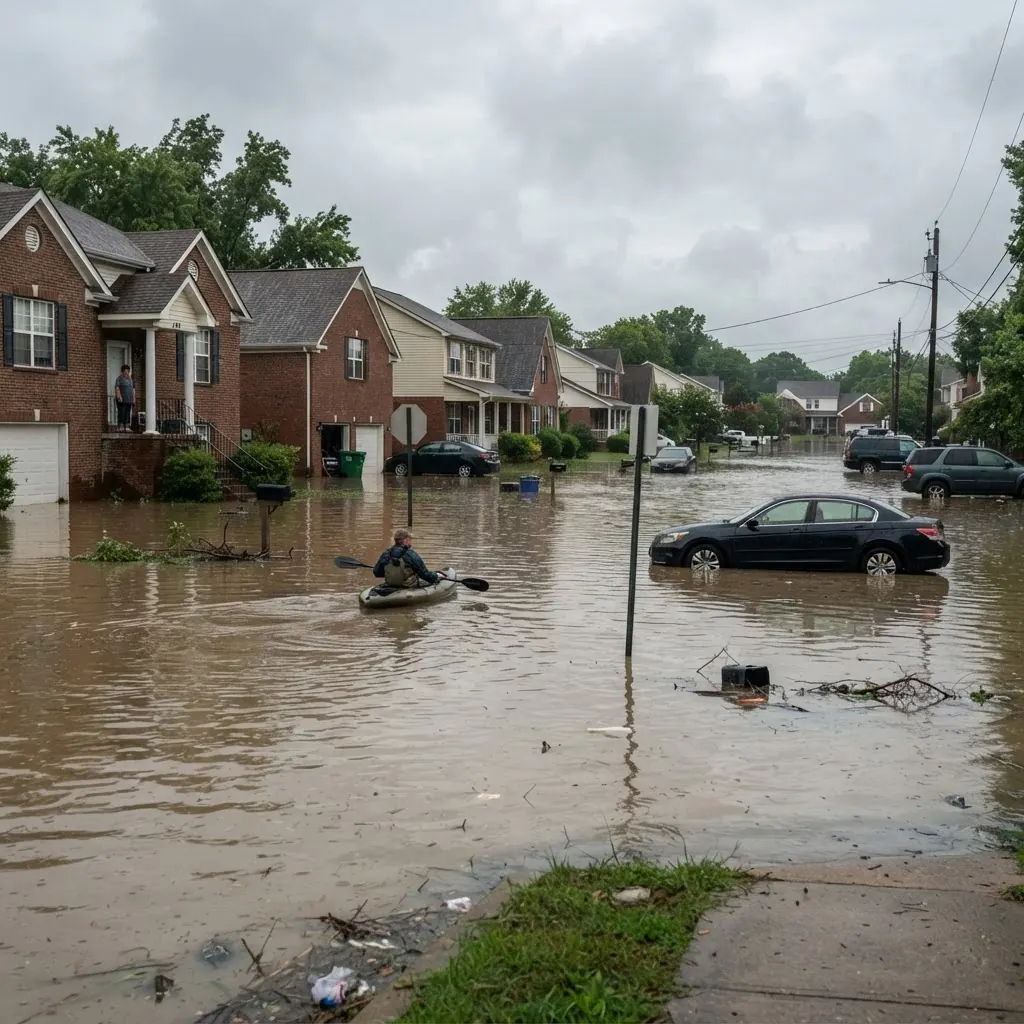
Flood insurance is specialized policy coverage protecting property structures and contents against rising surface water damages. Government-backed plans typically cap building coverage at $250,000 and enforce a roughly 30-day waiting period before protection begins. Standard homeowners policies exclude external surface water damage entirely, leaving non-flood policyholders fully liable for flood repairs. Below, we outline flood definitions, coverage limits, policy exclusions, risk zone factors, and waiting period requirements.
Every hurricane season produces the same news montage: a homeowner standing in a living room full of soggy drywall, holding a homeowners policy, saying the words that insurance adjusters dread — "but I have insurance." They do have insurance. It just doesn't cover floods. Not the storm surge, not the rising creek, not the four inches of water that came through the foundation. Virtually every standard homeowners policy in the United States excludes flood as a peril, and most buyers never notice until the water is in the house.
This guide is about the gap — what "flood" means to an insurer, how flood coverage actually works, what it costs, and how to decide whether you need it. The short version: more people need it than think they do, and the worst time to discover that is during a forecast.
At a Glance: Flood Insurance Coverage (2026)
| Factor | Details & Key Terms |
|---|---|
| Primary Exclusion | Standard homeowners policies exclude surface water, storm surge, and ground-level water intrusion |
| Structural Coverage Limit | National Flood Insurance Program (NFIP) caps building replacement at $250,000 |
| Personal Property Limit | NFIP caps personal belongings coverage at $100,000 (actual cash value, depreciated) |
| Standard Waiting Period | Coverage typically takes effect after a mandatory 30-day waiting period from purchase |
| Non-High-Risk Exposure | Roughly 25% of all flood claims originate outside mapped high-risk flood zones |
| Cost Range | Annual premiums typically range from roughly $400 in low-risk zones to $2,500+ in high-risk areas |
What "flood" means in insurance terms
Insurance uses a narrower definition of flood than the evening news does. A flood, for coverage purposes, is water touching the ground before it enters your home — typically defined as a general and temporary condition where two or more acres of normally dry land, or two or more properties, are inundated. Rain enters through a wind-torn roof and soaks your ceiling? That's wind damage, probably covered. A storm swells the creek and the same water flows under your front door? That's a flood — excluded.
This ground-water distinction is why the disputes get ugly. Sump pump failure during a storm? Some policies cover it as a water-damage endorsement, some exclude it. Sewer backup? Separate endorsement, everywhere. Water seeping in over hours vs. rushing in over minutes? Judges have earned fees off that question. The practical takeaway: water coming from above is usually a homeowners claim, water coming from below or outside at ground level is usually a flood claim, and flood claims need flood insurance.
What your standard policy does cover
To be fair to your homeowners policy, it handles the more common water scenarios: burst pipes, overflowing tubs, appliance hose failures, rain through a damaged roof, and in most states, sudden-and-accidental water damage generally. These claims are frequent and mostly payable. What the standard policy excludes, in a single sentence near the back of your declarations, is surface water, storm surge, mudflow, and rising water of any natural cause — plus, in most cases, earth movement that a flood triggers, like a landslide that follows saturation.
Renters get the same deal in miniature: your contents policy covers your stuff against a pipe burst, but if a flood destroys your furniture, that's flood insurance's job — and yes, flood policies for renters exist, covering personal property only.
How NFIP flood insurance works
In the U.S., most flood coverage flows through the National Flood Insurance Program (NFIP), run by FEMA and sold through participating private insurers. NFIP residential coverage comes in two buckets: up to $250,000 for the building itself and up to $100,000 for personal property (contents). Those caps are real — in expensive homes, they leave a gap, which is where private flood insurance comes in, offering higher limits, sometimes replacement-cost contents coverage, and often shorter waits.
For years NFIP pricing was a political football; it now runs on a risk-based rating model that prices each home on its actual exposure — distance to water, elevation, replacement cost — rather than broad flood-zone maps alone. The result is that premiums vary enormously, from a few hundred dollars a year in genuinely low-risk areas to thousands in high-risk zones.
What flood insurance covers (and what it excludes)
Flood insurance covers the structure: foundation, walls, electrical and plumbing systems, HVAC, built-in appliances, permanently installed carpet and cabinetry. Contents coverage handles your belongings — furniture, clothing, electronics — though NFIP contents payouts are actual-cash-value, meaning depreciation applies to everything.
The exclusions surprise people. NFIP does not cover: basements beyond structural elements and specific mechanicals (finished basement walls, carpet, furniture in the basement are famously excluded), money, precious metals, vehicles, and — most painfully — temporary living expenses while your home dries out. If a flood makes your home unlivable, your hotel bill is yours unless a private flood policy or a rare endorsement covers it. Losses from moisture, mildew, or mold that you could have prevented after the water recedes are also excluded, which makes post-flood documentation and drying timelines matter enormously.
Who actually needs it (it's not just high-risk zones)
Here's the number that reframes the whole question: roughly a quarter of NFIP claims come from properties outside mapped high-risk flood zones. Flood risk isn't a coastline issue — it's a drainage, river, and weather issue. Flash flooding is the most common natural disaster declaration in the country, and new construction across the country keeps redirecting water into places that never expected it. FEMA's own maps label large swaths of the country "moderate-to-low risk," and those areas account for a meaningful share of both claims and federal disaster assistance denials.
A practical screen rather than a map: Does water collect anywhere on your street in a heavy rain? Is there a creek, canal, or drainage ditch within sight of your property? Is your home finished below grade? Did your seller's disclosure mention any water intrusion? Any yes moves flood insurance from "paranoid" to "priced." And if your lender requires it because you're in a mapped Special Flood Hazard Area, the question answers itself — you can't close the mortgage without it.
Costs, waiting periods, and the timing trap
NFIP policies carry a 30-day waiting period before coverage takes effect — 30 days from application and premium payment, with narrow exceptions (map changes, loan closings). The point of the wait is to stop people from buying insurance when the radar turns red, but the practical effect is that procrastination is the real risk. Buying flood insurance the day the hurricane forms buys you nothing except a premium payment. Buying it in a dry month, when nothing is forecast, is the entire game.
Costs have a wide range, as risk-based pricing implies: a few hundred dollars annually for a low-risk home with a preferred-risk profile, four figures for homes in Special Flood Hazard Areas or with basements below the base flood elevation. Your quote requires an elevation picture of your home at minimum; the insurer will pull FEMA's flood map for your address automatically. Comparing NFIP against a private flood quote is worth an afternoon — private insurers now compete genuinely on price in many markets, and they can cover the hotel bills and basement finishes NFIP won't.
The clean summary: your homeowners policy is built for water that comes from inside your home or through the roof. Water that rises and flows in from outside is a different product entirely. Whether that product costs you $400 or $2,500 a year, it's a bill worth taking seriously before the forecast makes the decision for you — thirty days too late.
Frequently Asked Questions: Home & Renters
What does standard home insurance not cover?
Flood, earthquake, and sewer backup are excluded from standard policies and need separate coverage or endorsements. Normal wear and tear and deferred maintenance are never covered.
How is my home's insured value calculated?
Insurers typically insure the rebuild cost, not the market price of the home. Because construction costs rise, review your dwelling coverage every year or two.
Does renters insurance cover my roommate's belongings?
No. A renters policy only covers the belongings of the named policyholder. Roommates need their own policies.
Will a home insurance claim raise my premium?
Often yes, especially small claims. Insurers report claims to shared databases (CLUE reports) that follow your claims history for about seven years, so it can pay to absorb minor losses yourself.
Sources
- National Association of Insurance Commissioners (NAIC) — consumer guides and insurance industry data.
- Your state insurance department — state-specific rules, rate filings, and license verification.
- FEMA — flood risk and National Flood Insurance Program rules.
Sources reflect the primary references used to research this guide. Always confirm state-specific rules with your own insurance department.